


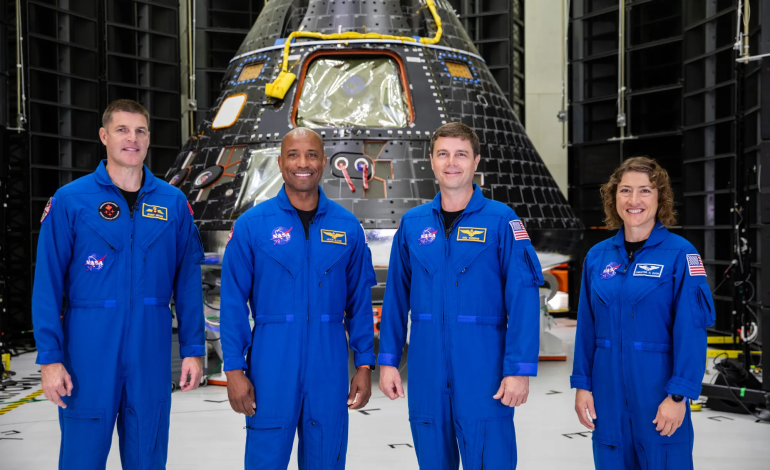

Artemis II marked the first time humans travelled around the Moon in more than 50 years. The mission began on 1 April 2026 and ended with a safe splashdown on 10 April 2026 after a ten day journey.
Preparation and earlier missions
Artemis II builds on Artemis I, which flew in 2022 without astronauts. That mission tested the Orion spacecraft and revealed areas that needed improvement, including the heat shield during re entry.
For Artemis II, NASA adjusted the flight path to reduce heat and improve safety. The mission also tested life support systems and human performance in deep space.
Comparison with Apollo missions
The last time astronauts travelled to the Moon was during the Apollo programme, which ended in 1972. Apollo missions focused on landing humans on the Moon.
Artemis II did not land but travelled farther and focused on testing systems for future missions. It is seen as a preparation step before astronauts return to the lunar surface.
The astronauts on board
The spacecraft, Orion, carried four astronauts into deep space, travelling farther than any humans before.
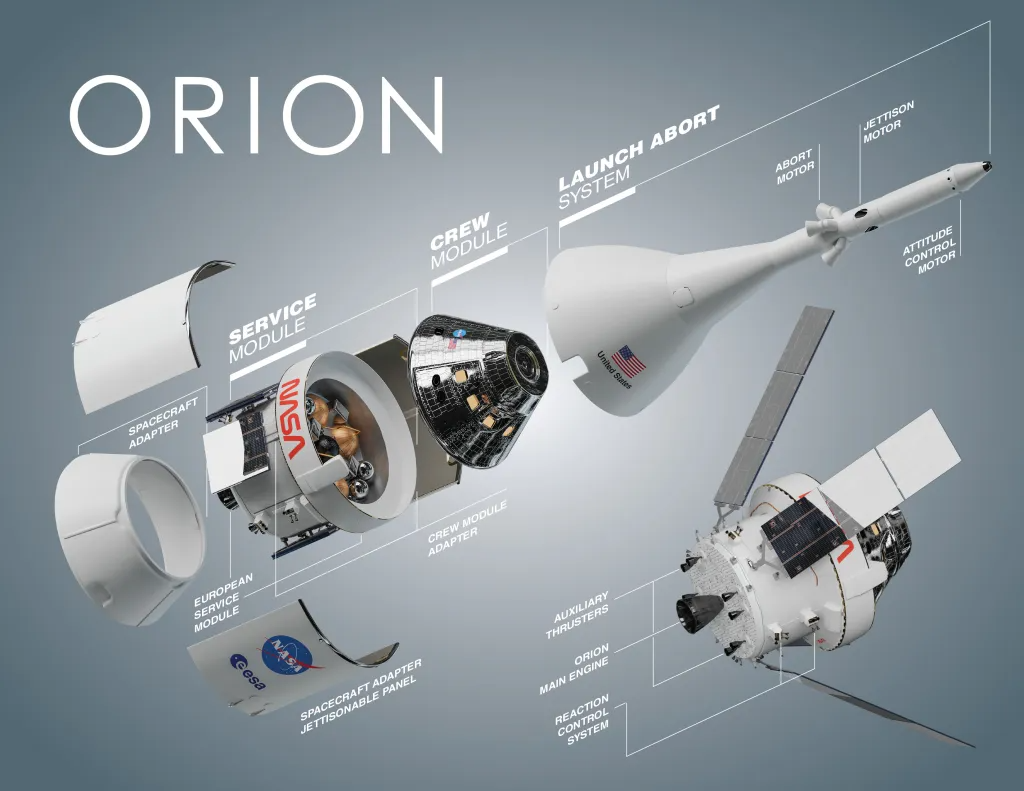
The Orion spacecraft is built using 355,056 individual parts. At its fastest, the spacecraft travelled about 32 times the speed of sound during re entry.
The crew included Reid Wiseman, Victor Glover, Christina Koch and Jeremy Hansen. The mission was historic in representation as well. Glover became the first Black astronaut on a lunar mission, Koch the first woman to travel this far into space, and Hansen the first non US astronaut to take part in a Moon mission.
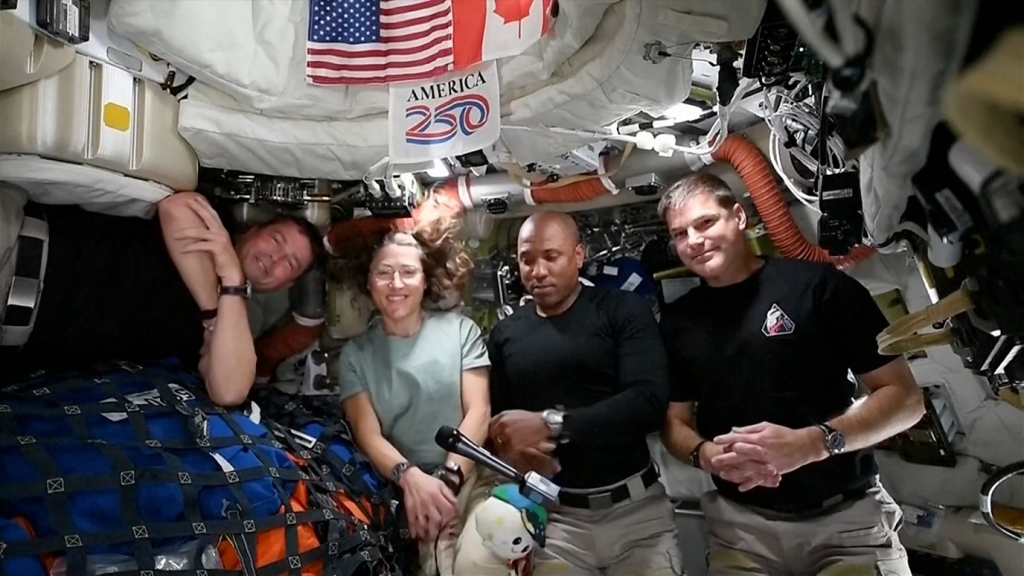
The crew saw a solar eclipse while on Orion, which is when the Sun was completely blocked out by the Moon – they wore these funky protective glasses in order to look at it.
All four astronauts trained for years. This included simulations, survival training, emergency drills, and long duration spaceflight preparation.
Launch and journey to space
The mission launched from Cape Canaveral using NASA’s Space Launch System rocket. After reaching Earth orbit, Orion began its journey toward the Moon.
The spacecraft followed a wide path around the Moon rather than landing. At its farthest point, it reached about 252,756 miles from Earth. This is farther than any Apollo mission travelled.
Around the far side of the Moon
As the spacecraft moved behind the Moon, communication with Earth was lost for about 40 minutes. This is expected, as the Moon blocks radio signals.
During this phase, the astronauts saw parts of the Moon never visible from Earth and captured images of both the Moon and Earth from deep space.
Commander Reid Wiseman later said they “saw sights that no human has ever seen,” describing the experience as remarkable.
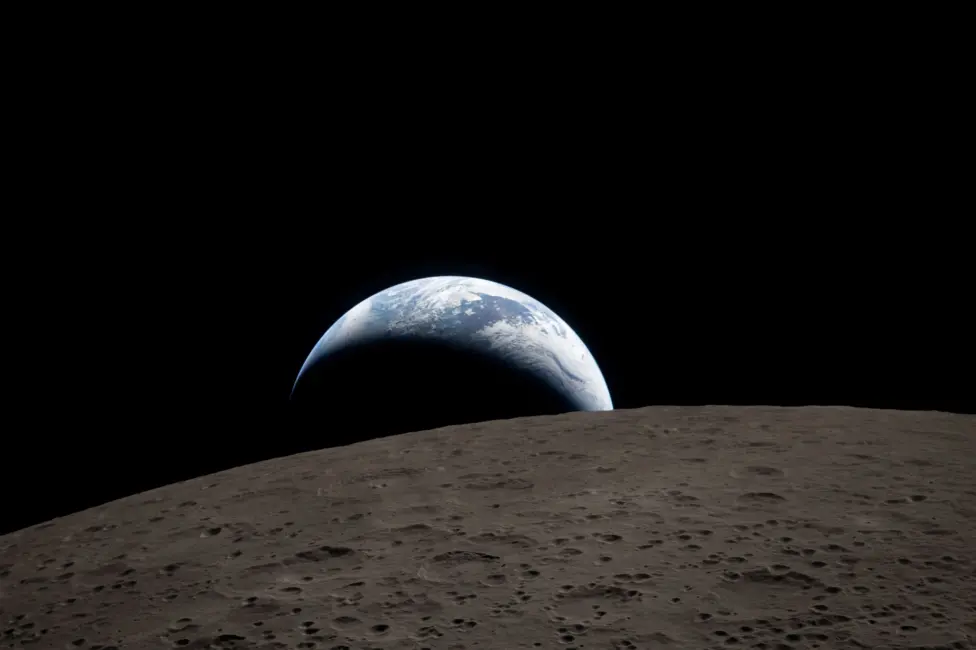
An Earthrise! This incredible picture taken by the crew shows part of our planet that’s experiencing nighttime, out in the distance beyond the far side of the Moon.
Return to Earth
After looping around the Moon, Orion began its journey back. In the final hours, astronauts prepared the cabin for re entry.
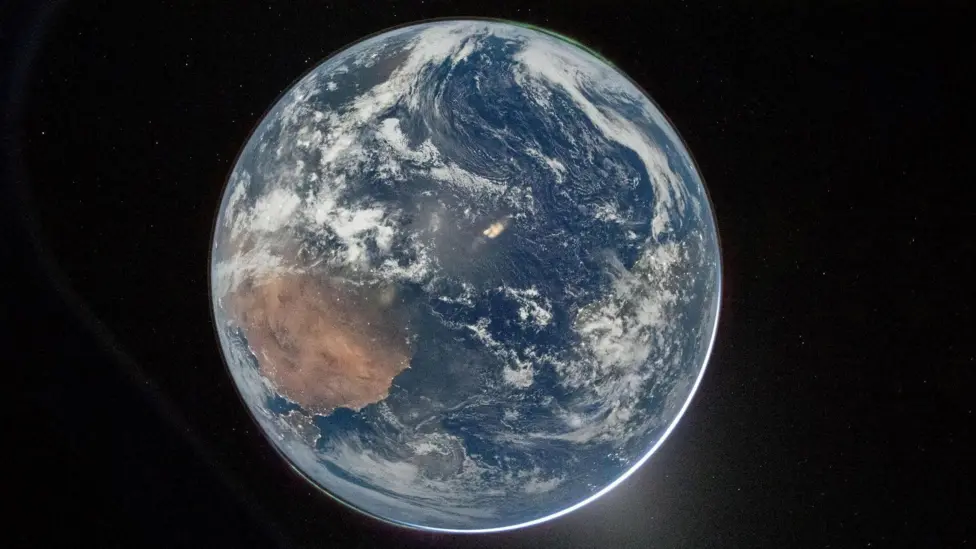
The crew took this picture of their home while on board Orion.
The spacecraft began re entry at around 7:53 p.m. EDT, when it reached the upper atmosphere about 400,000 feet above Earth. At this point, Orion was travelling at around 35 times the speed of sound. As expected, a layer of superheated gas formed around the capsule, causing a short communication blackout lasting about six minutes.
Parachutes slowed the descent before the capsule landed in the Pacific Ocean off the coast of California on 10 April 2026. Recovery teams then brought the astronauts safely out of the capsule.
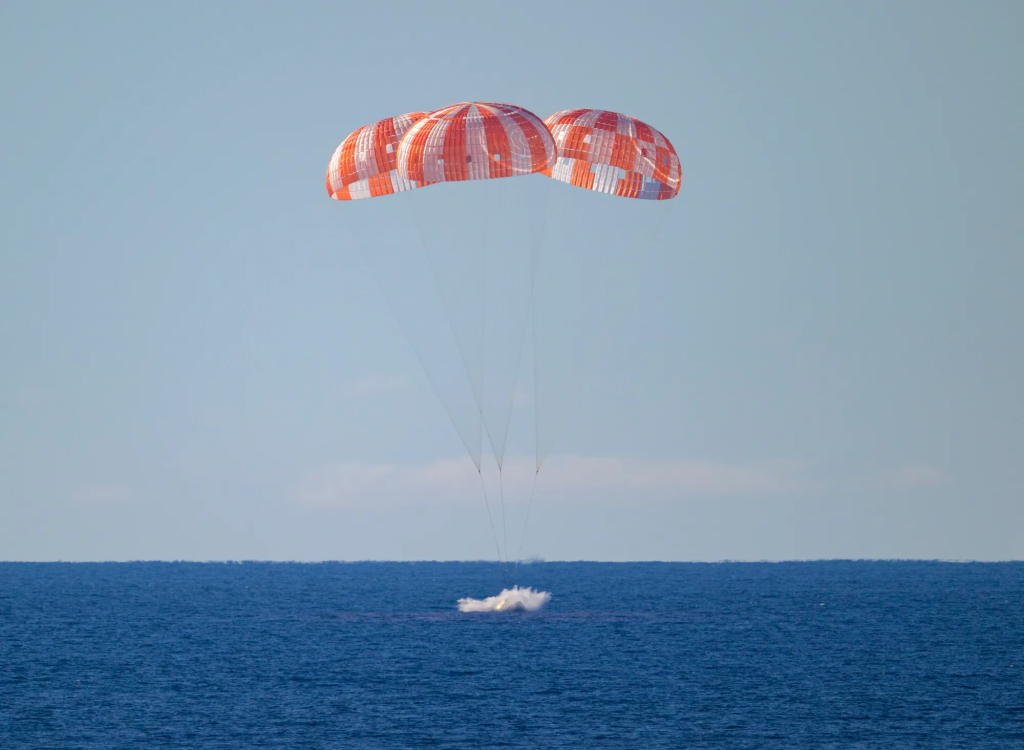
NASA’s Orion spacecraft with Artemis II lands lands in the Pacific Ocean off the coast of California, Friday, April 10, 2026 at 8:07 p.m. EDT.
Artemis II is a key step toward future missions. It tested how humans travel and operate in deep space. The long term goal is to return humans to the Moon and later prepare for missions to Mars.
Photo: The Artemis II crew is shown inside the Neil Armstrong Operations and Checkout Building at NASA’s Kennedy Space Center in Florida in front of their Orion crew module. From left are: Jeremy Hansen, mission specialist; Victor Glover, pilot; Reid Wiseman, commander; and Christina Hammock Koch, mission specialist. Photo Credits: NASA