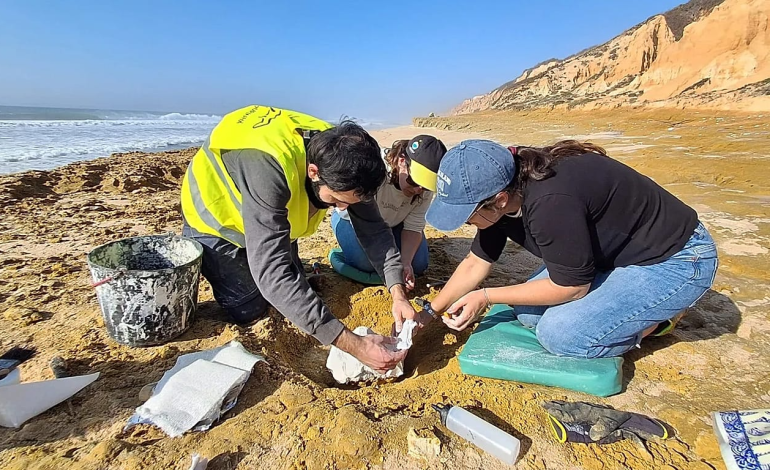



Archaeologists in Hungary have discovered a well preserved Roman sarcophagus that is about 1,700 years old.
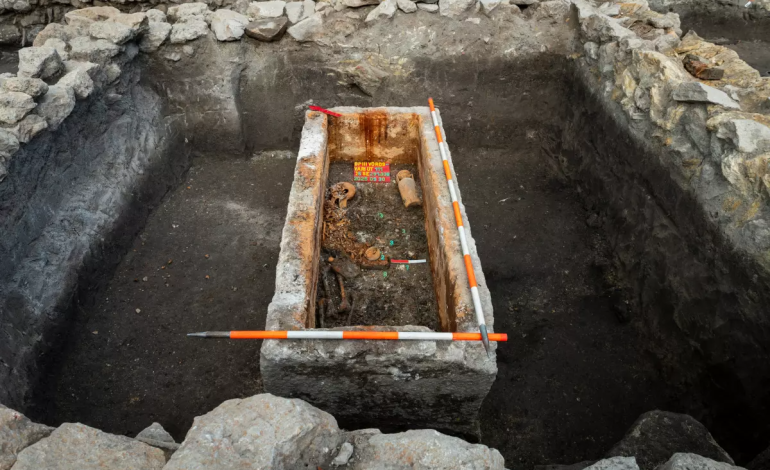
The limestone coffin was found in Budapest, the capital of Hungary, during an excavation in Óbuda, a northern part of the city. This area was once part of an ancient Roman town called Aquincum.
What is a sarcophagus
A sarcophagus is a large stone coffin used in ancient times to bury people.
The newly discovered sarcophagus was still sealed with its stone lid. Metal clamps and melted lead had kept it tightly closed for centuries.
When researchers carefully lifted the lid, they found a complete skeleton inside.
A burial from ancient Roman times
Experts believe the grave belonged to a young woman who lived about 1,700 years ago during the Roman period.
The coffin was discovered near the ruins of old houses in Aquincum. In the 3rd century, this area stopped being used as a residential area and later became a burial ground.
Nearby, archaeologists also found a Roman aqueduct and eight other graves, but none were as rich or as well preserved as this one.
Objects found inside the coffin
The sarcophagus contained many objects placed there during the burial.
Researchers discovered two intact glass vessels, bronze figurines, and about 140 coins.
They also found a bone hairpin, amber jewelry, and pieces of fabric woven with gold thread.
Experts say these items were placed in the coffin by the woman’s relatives as gifts for her journey in the afterlife.
Clues about the woman’s life
Archaeologists believe the woman may have been wealthy or belonged to a high social class because of the valuable items found in the coffin.
During Roman times, much of present day Hungary was part of a province called Pannonia. The Roman Empire protected the area with a military camp located less than 1.6 kilometres from the discovery site.
What scientists will study next
Scientists will now examine the woman’s bones to learn more about her age, health, and where she might have come from.
Researchers also removed about 4 centimetres of mud from inside the coffin. They hope this mud may contain more small objects, such as earrings or other jewelry.
Archaeologists say discoveries like this help people learn more about how ancient Roman communities lived and how families cared for their loved ones even 1,700 years ago.
Photo: Archaeologists with the Budapest History Museum discovered the limestone coffin during a large-scale excavation.