

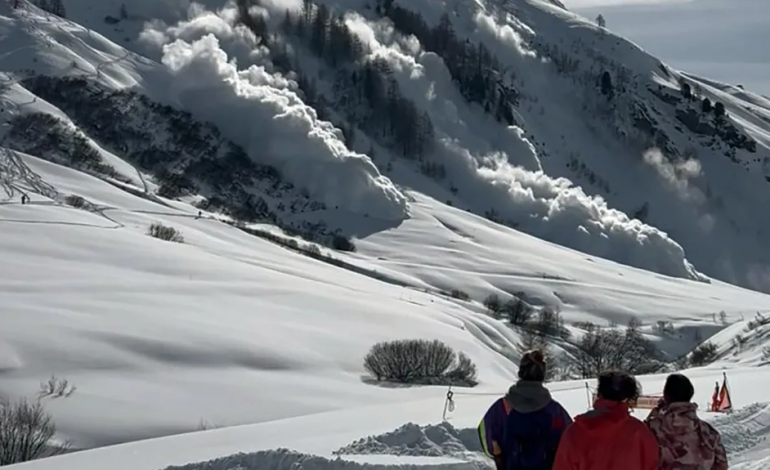

Rescue teams in Alps say more people have died in avalanches this winter, and they believe changing weather and unprepared skiers are partly to blame.
According to European Avalanche Warning Services, more than 100 people have died in avalanches across Alps this season. This is the highest number in about eight years.
What is an avalanche
An avalanche happens when a large mass of snow suddenly slides down a mountain slope.
These fast moving waves of snow can bury people, trees and buildings in seconds.
Avalanches often occur in mountainous regions such as French Alps, where many tourists visit each year for skiing and snowboarding.
Why avalanches are increasing
Mountain experts say weather patterns are changing.
Frédéric Bonnevie, a mountain patroller who has worked in Alps for 32 years, says winters are becoming shorter and good snow is now found mostly at higher altitudes.
This season, the snow has been thick but unstable, which increases the risk of avalanches.
Large amounts of snow also fell in January after a dry period earlier in the winter, creating dangerous layers of snow on the mountains.
Did You Know?
The Alps constitute the world’s largest skiing destination, hosting over 80% of the world’s large ski resorts and covering areas in France, Austria, Italy, Switzerland, and Germany.
Danger outside ski pistes
Ski resorts manage and monitor marked ski runs called pistes. However, many accidents happen when skiers go off piste, meaning outside the safe and controlled areas.
Stéphane Bornet, director of the French snow safety organisation Anena, says many victims were experienced skiers but did not fully understand mountain conditions.
Some did not carry important safety equipment.
Safety equipment can save lives
Rescue teams say special avalanche safety tools can greatly increase a person’s chance of survival.
These include a transceiver that sends a signal to help rescuers find someone buried in snow, along with a shovel and probe.
If a skier carries a transceiver, there is about a 70 percent chance of surviving an avalanche.
Without one, rescue operations take much longer and the survival rate drops to about 20 percent.
Why time matters
Rescuers say the first 16 minutes after a person is buried in snow are critical.
Even 50 centimetres of dense snow can weigh more than a quarter of a tonne on a person’s body, making it very difficult to breathe or move.
Helicopters are often used because they are the fastest way to reach avalanche victims in remote mountain areas.
Recent avalanche incidents
Recent avalanches have been reported across several countries in Europe.
In France, the bodies of two female skiers were found buried under snow near La Chapelle d’Abondance.
In Austria, three people died after an avalanche in St Anton.
In Switzerland, a train was derailed when an avalanche hit its side, although no one was killed.
A reminder about mountain safety
Experts say millions of people visit ski resorts every year, and most enjoy the mountains safely.
However, rescuers warn that mountains are powerful and unpredictable.
They encourage skiers to check avalanche warnings, carry safety equipment and travel with others.
As one mountain expert explained, mountains are a beautiful place for adventure, but visitors must respect the risks that come with nature.
Photo Credits: BBC